

The ovaries are the first organs to age in the human body, affecting both fertility and overall health. Human life expectancy has increased significantly from 45 to 85 years in the last 150 years, but the age of natural menopause has remained around the age of 50. According to studies, the decline in female fertility begins around the late 20s to early 30s and accelerates after the age of 35, especially among nulliparous women, so fertility declines with age.
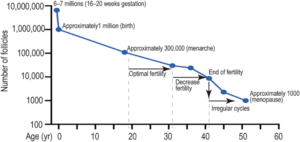
Ovarian aging: mechanisms and intervention strategies 2022
Reproductive aging in women occurs around the age of 35, when their bodies are still robust in terms of other physiological functions besides reproduction. This not only leads to fertility problems, but also triggers various health problems in women. Ovarian aging is caused by mechanisms such as mitochondrial dysfunction, oxidative stress, telomere shortening, and DNA damage. Intervention strategies include antioxidant and mitochondrial-targeted therapies, antioxidants, hormonal regulation, fertility preservation techniques such as egg cryopreservation, and lifestyle approaches such as healthy diet and exercise. While there is no cure to reverse aging, these strategies aim to preserve ovarian function and extend reproductive lifespan, with the use of antioxidants.